
Reconstituted Cosmetic Peptide Vials: In-Use Stability and Microbiological Controls
Why a dry-vial shelf life cannot define the in-use period after activation, and what chemical, microbial and packaging evidence a cosmetic kit needs.
Why a dry-vial shelf life cannot define the in-use period after activation, and what chemical, microbial and packaging evidence a cosmetic kit needs.
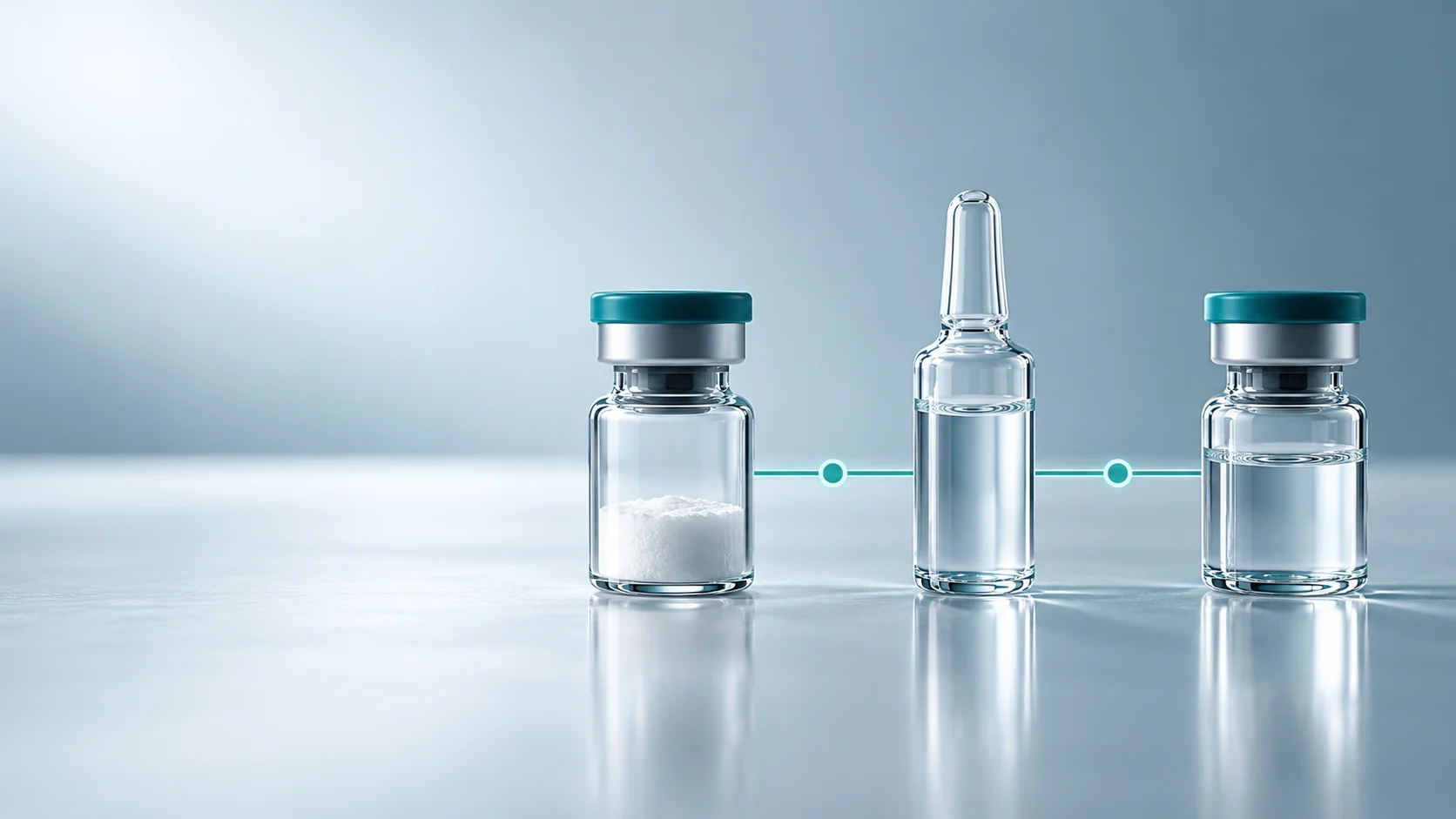
A dry cosmetic peptide vial and its reconstituted liquid need separate stability decisions. The shelf life of the sealed dry cake does not establish how long a mixed formula remains chemically stable or microbiologically suitable for use. A defensible vial-kit brief names the exact activator, mixing ratio, container, storage conditions and tested in-use period; it does not substitute a generic “use within X days” claim.
“Peptide powder plus activator” is not a sufficient product specification. Identify the peptide and excipients in the dry vial, the activator’s full composition and microbiological quality, the intended cosmetic application, the unit size and the closure system. A preservative in one liquid is not proof that a different final mixture is protected at the actual mixing ratio. Likewise, a dry vial’s low water content says little about the reconstituted product. State whether the package is single-use or may be opened again, because repeated access changes the contamination scenario. Cosmetic, research and injectable presentations require separate documentation and regulatory reviews; this article concerns cosmetic development only. The private-label kit guide covers packaging decisions that should be fixed before the in-use study.
At time zero and at planned in-use points, measure the attributes that can change in the actual mixed presentation. These may include peptide assay, a stability-indicating impurity profile, pH, color, clarity and visible particles. Choose methods that distinguish intact peptide from relevant degradants rather than relying only on total chromatographic area. Check whether adsorption to the selected container affects recovery, especially at low concentrations. Include the worst credible handling and storage conditions that the label will permit; accelerated results can help investigate risk but should not replace a justified real-use period by themselves. A dry-product COA answers what was released before mixing. It cannot certify the liquid after activation. The stability-indicating method guide explains the analytical design.
Water, ingredients, packaging and consumer handling can introduce microorganisms. The FDA’s cosmetic microbiology guidance explicitly identifies these routes and places responsibility for product safety on the manufacturer or distributor. For a water-containing final cosmetic, a documented microbiological risk assessment and, where appropriate, preservation efficacy testing should reflect the mixed formula and its intended use. ISO 11930:2019 describes evaluation of antimicrobial protection of cosmetic products, including a preservation efficacy test and risk-based interpretation; it is not a blanket requirement that every dry ingredient pass a challenge test. If the final formula is not adequately protected, change the design or shorten the intended use based on evidence. Never infer sterility from the word “lyophilized.”
Specify how the customer should identify the correct kit components and the amount of activator; avoid ambiguous “add water” language when the tested activator is a controlled formula. The label should state only a storage condition and in-use period that the finished configuration supports. FDA explains that cosmetic shelf life varies with formulation, use and storage, and that companies are responsible for determining it; it does not provide one universal time for mixed peptide kits. Retain time-zero and end-point results, the microbiological assessment, packaging compatibility and the exact tested directions. If any component, ratio, container or access pattern changes, evaluate whether the in-use claim still holds. Link this work to vial quality control and shipping and receiving controls.
There is no reliable universal duration. Set the in-use period from chemical and microbiological data for the exact formula, activator, package, directions and storage conditions.
No. It describes the sealed dry presentation. Mixing creates a different chemical and microbiological environment that needs its own evidence.
No. Freeze-drying removes water under controlled processing conditions; it is not a sterility claim. Sterile products require a separate validated manufacturing and regulatory framework.
Editorial scope: cosmetic vial-kit development. No injectable preparation, therapeutic use, dosing or untested in-use period is implied.